
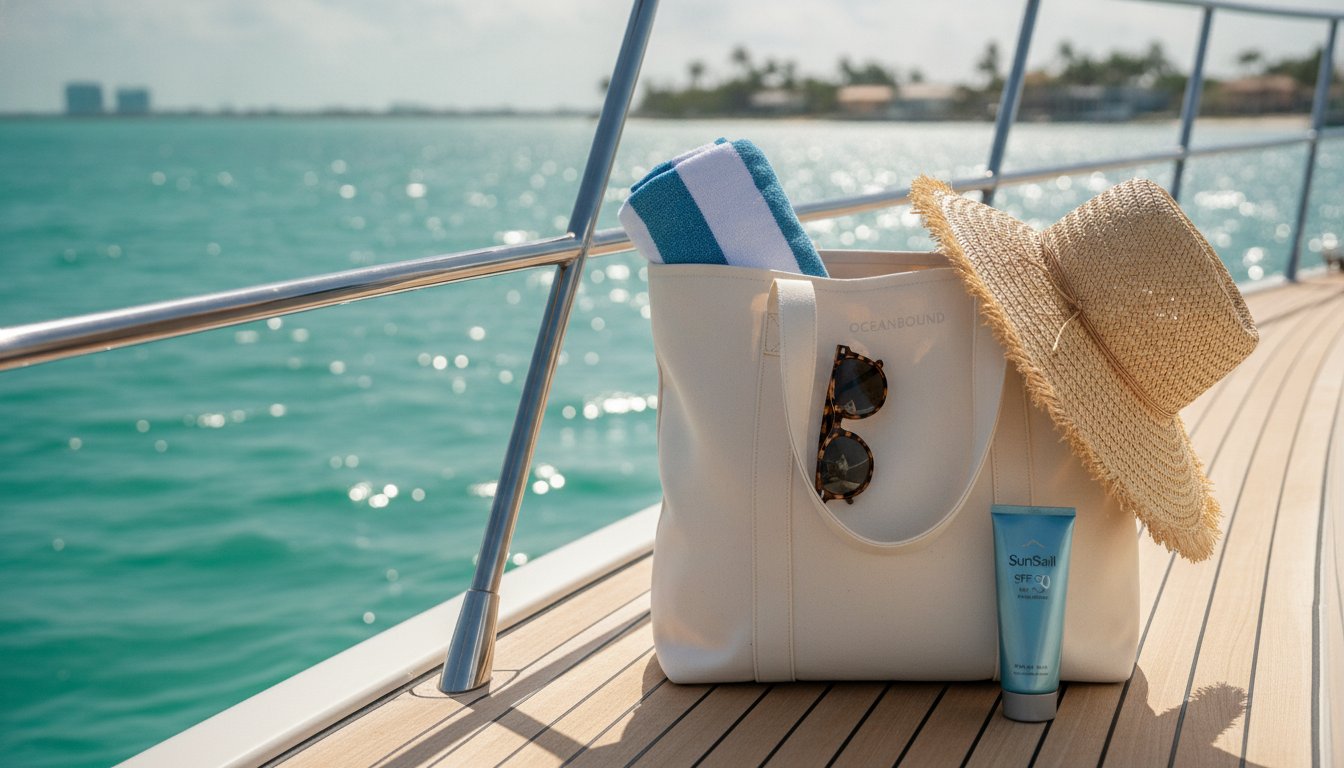
What if the secret to a truly effortless day on the water isn’t about how much you can fit into your tote, but how precisely you choose your gear? Many guests feel the urge to overpack, only to find their favorite accessories ruined by salt spray or their heavy bags cluttering the deck. It is a common struggle to build the perfect beach bag checklist for boat trip excursions that balances high-performance protection with the style needed for a waterfront lunch. We agree that your focus should stay on the sparkling horizon, not on digging through a mountain of damp towels in a cramped space.
This 2026 guide ensures you are prepared for every moment, from the first splash to the final cocktail. You’ll learn exactly what to bring to stay comfortable and how to navigate the latest coastal standards, such as using the newly approved bemotrizinol sunscreens for superior skin protection. We provide a curated look at the transition gear needed for island hopping and the etiquette tips that mark you as a seasoned insider. Prepare to leave the clutter behind and embrace a day of pure, salt-aired relaxation with total confidence.
Key Takeaways
- Understand why high-SPF lotion is a safety essential on deck and learn about the newest 2026 ingredients for superior UV defense.
- Master the art of boat-to-bar dressing with our tips for choosing transition gear that looks perfect at a waterfront grill.
- Streamline your day by leaving heavy safety equipment and navigation tools at home; your licensed captain has the technical details covered.
- Use our curated beach bag checklist for boat trip success to pack efficiently and feel like a seasoned maritime regular.
- Discover the two-towel rule and other insider secrets that keep you dry, comfortable, and prepared for every island stop.
The Foundation: Essential Gear for On-Board Comfort
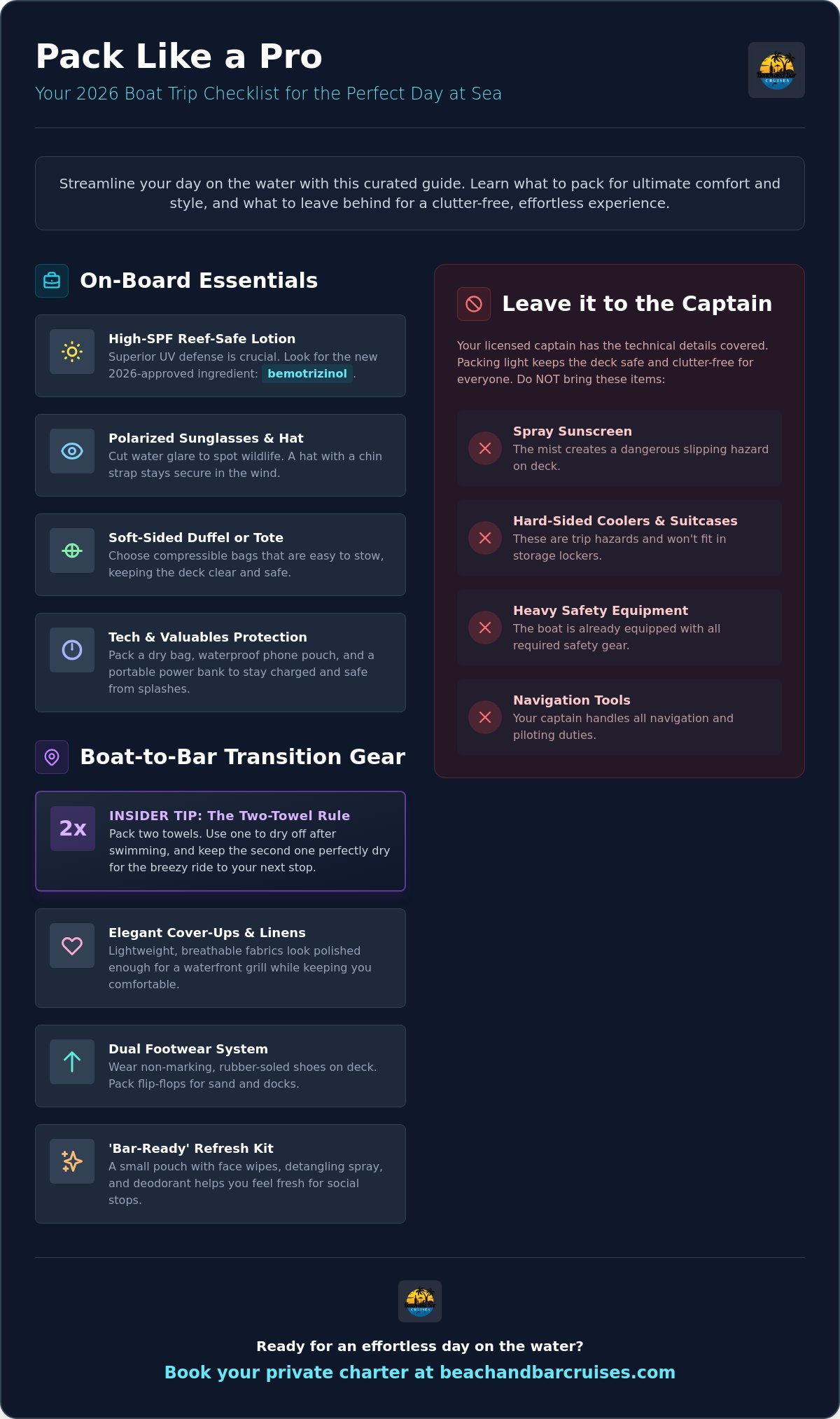
Your beach bag checklist for boat trip success starts with items that handle the unique environment of a moving vessel. Unlike a stationary day at the shore, being on a boat means managing wind, salt spray, and the reflective power of the open water. Prioritize high-SPF, reef-safe sunscreen in lotion form rather than sprays. While sprays are convenient, the mist often settles on the deck, creating a dangerous slipping hazard for everyone on board. As of June 9, 2026, the FDA has approved bemotrizinol for use in the U.S., so look for this ingredient to get the latest in high-performance UV protection.
To visualize these essentials in action, watch this helpful guide on packing your gear:
Visibility is your best friend when you are cruising through coastal waters. Invest in high-quality polarized sunglasses rather than standard tinted lenses. Polarization cuts through the intense water glare, allowing you to spot dolphins, sea turtles, or fascinating underwater rock formations that others might miss. Pair your shades with a wide-brimmed hat that includes a sturdy chin strap. Even at modest cruising speeds, the wind can easily snatch a loose cap, and you don’t want to spend your afternoon turning the boat around for a lost accessory.
Protecting Your Tech and Valuables
Electronics and saltwater don’t mix well. Pack a lightweight, soft-sided dry bag to keep your phone and camera safe from unexpected splashes. Use waterproof phone pouches that allow you to snap photos through the plastic so you never have to expose your device to the elements. While many modern vessels offer power, it is wise to bring a portable power bank. You don’t want to rely on the boat’s ports when everyone else needs a charge at the same time. Keep your physical ID and cards in a dedicated waterproof internal pocket for easy access during waterfront stops.
Choosing the Right Bag for the Boat
The type of bag you choose matters as much as what is inside it. On a 21-foot vessel, deck space is a premium. Avoid hard-sided suitcases or rigid, oversized coolers that act as trip hazards and won’t fit in storage lockers. Instead, choose soft-sided totes or duffels that can be easily compressed and stowed under seats. This keeps the walking areas clear and ensures you follow essential boating safety gear protocols by maintaining an organized, clutter-free deck. For more tips on preparing for your next excursion, check out our latest maritime lifestyle guides.
Transition Gear: Packing for Swimming and Waterfront Stops
A private charter often involves more than just sitting on the deck; it is a journey between secluded swimming spots and vibrant dockside venues. To handle this shift gracefully, your beach bag checklist for boat trip essentials must include a transition strategy. Pack two towels for every guest. Use the first one to dry off immediately after a dip in the salt water. Keep the second towel tucked away and dry. This ensures you aren’t sitting on damp fabric during the breezy ride to your next destination.
Clothing choices define the boat-to-bar experience. Choose lightweight linen shirts or elegant cover-ups that breathe well but look polished enough for a waterfront grill. Your footwear strategy is equally important. Wear non-marking rubber-soled shoes while on board to protect the deck and provide grip. Toss a pair of flip-flops into your bag for when you step off onto the sand or a wooden pier. While you focus on your personal style, your captain manages the required boating safety equipment to ensure a secure voyage.
The ‘Bar-Ready’ Refresh Kit
The transition from beach mode to dinner mode is easier with a small, curated kit. Pack a pouch with detangling spray and a wide-tooth comb to tame wind-blown hair. Include face wipes to remove salt and sand, along with a travel-sized deodorant and a light, coastal fragrance. These small touches help you feel refreshed and confident as you step off the boat and into a social setting. Keeping a dedicated wet bag for used swimsuits is a final pro tip that prevents dampness from spreading to your dry clothes.
Hydration and Snacks for Private Charters
Staying hydrated is vital under the midday sun. Bring reusable water bottles to help reduce single-use plastics, a practice that aligns with modern eco-friendly boating standards. When it comes to snacks, choose items that won’t melt in the heat or leave messy residue on the upholstery. Pre-cut fruit, nuts, or pita chips are excellent choices. Check our blog for more boat-friendly lifestyle tips as you begin planning your private excursion with us.
The Captain’s Advantage: What to Leave Behind
One of the greatest perks of booking a private charter is the significant reduction in your mental load. When you are refining your beach bag checklist for boat trip adventures, remember that the boat itself is a fully equipped basecamp. You don’t need to haul heavy safety gear or bulky equipment down the dock. Your USCG-licensed captain ensures that all required life jackets, flares, and emergency supplies are on board and ready for use. This allows you to reclaim valuable bag space for your personal comfort items.
Leave the heavy navigation tools and handheld GPS units at home. Modern vessels are equipped with advanced GPS and depth finders that allow your captain to navigate safely while you relax. Similarly, skip the oversized, rigid coolers. Most private charters provide on-board ice and dedicated storage for your refreshments, keeping the deck clear for lounging. Finally, forget about cleaning supplies. Professional crews handle all post-trip sanitation and boat care, so your only job is to step off the boat and enjoy your evening.
Why Private Charters Change Your Packing Strategy
A captained trip allows you to focus entirely on the sparkling scenery and the company of your guests. You can spend your time learning what the steering wheel of a ship is called rather than worrying about the technical logistics of steering it yourself. When you board, feel free to give a hearty Ahoy to your captain, knowing they have all the maritime heavy lifting covered for the day.
Respecting the Vessel and Crew
To keep the experience premium for everyone, avoid bringing ‘staining’ items. Red wine, dark berries, or snacks with artificial dyes can permanently ruin expensive marine upholstery in a matter of seconds. It is also vital to leave the spray sunscreen for the dock. While we mentioned the slipping hazard earlier, the mist also creates a dangerously slippery ‘ice rink’ effect on fiberglass decks that is incredibly difficult to remove. Sticking to lotions shows you are a savvy guest who respects the boat and the hard work of the crew.
Step Aboard for Your Next Coastal Adventure
Mastering your packing strategy transforms a simple excursion into a seamless luxury experience. By focusing on high-performance essentials like polarized lenses and reef-safe lotions while leaving heavy logistics to your captain, you ensure every moment is spent enjoying the view rather than managing clutter. Your refined beach bag checklist for boat trip success bridges the gap between a refreshing swim and a sophisticated dockside dinner. It’s about bringing exactly what you need to feel like an insider on the water.
At Beach & Bar Cruises, we specialize in removing the operational burdens of your vacation. We provide a beautiful private 21-foot Tidewater boat and a professional USCG Licensed Captain who handles all safety and navigation. We offer personalized itineraries for up to 6 guests, ensuring your group enjoys an intimate, curated journey tailored to your specific desires. Ready for an effortless day on the water? Book your private charter with Beach & Bar Cruises today! We look forward to welcoming you on deck for a day of pure relaxation and effortless exploration.
Frequently Asked Questions
What kind of bag is best for a private boat tour?
Soft-sided bags like canvas totes or flexible duffels are the ideal choice for any maritime excursion. These bags easily compress to fit into under-seat lockers, keeping the deck clear for walking and lounging. Hard-sided suitcases or rigid bags create tripping hazards on a 21-foot vessel and are difficult to stow. Choosing a flexible bag ensures your beach bag checklist for boat trip stays practical and boat-friendly.
Do I need to bring my own life jacket on a chartered boat trip?
You don’t need to bring your own life jacket when booking a private charter with a USCG-licensed captain. All required safety gear, including personal flotation devices for all ages, is already on board and maintained to federal standards. If you have a specific, high-performance life jacket you prefer for swimming, you may bring it, but it is certainly not a requirement for your trip.
Should I bring my own cooler for a sunset cruise?
You should generally leave large, heavy coolers at home. Most private charters provide on-board ice and dedicated storage space for your favorite beverages and snacks. Bringing a massive rigid cooler can clutter the deck and limit your group’s movement. It’s much easier to pack your refreshments in a small, soft-sided insulated bag that can be tucked away once you’ve transferred items to the boat’s cooling area.
What are the best shoes to wear on a boat?
Non-marking rubber-soled shoes are the best choice for staying safe and comfortable on a moving vessel. These shoes provide the necessary grip on fiberglass decks that may become wet from salt spray or swimming. Avoid black-soled shoes or heavy boots that leave scuffs on the deck. Many guests choose to go barefoot while on the boat, but having supportive deck shoes for boarding and disembarking is always a smart move.
Can I bring my dog on a private boat charter?
Dog policies vary by vessel and itinerary, so it’s always best to check with your captain before arrival. While we love our furry friends, some private charters have specific rules regarding pets to ensure the safety of the animal and the cleanliness of the marine upholstery. If your dog is a seasoned sailor, mention it during the booking process to see if a pet-friendly custom cruise can be arranged for your group.
Is it okay to bring spray sunscreen on a boat?
It is much better to use lotion rather than spray sunscreen while on a boat. Spray mists often settle on the deck, creating a dangerously slippery surface that is difficult for the crew to clean mid-trip. Additionally, the chemicals in many sprays can permanently stain expensive marine vinyl. Including a high-quality lotion in your beach bag checklist for boat trip keeps the deck safe and the vessel looking its best.

Article by
Captain Les
Captain Les has been operating boats for 40 years. The last 10 years have been in the waters around Orange Beach so he is very familiar with the waters and the area.